

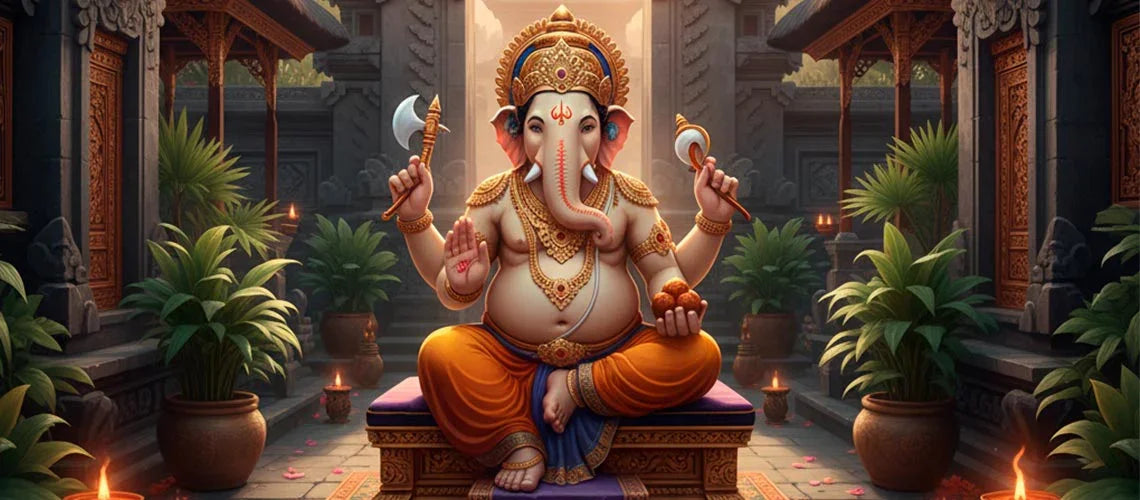
In the universe of Hindu deities, Ganesha is one of the most popular and revered figures—both in Eastern culture and in contemporary Western decor. Represented with an elephant's head and a human body, the god is a symbol of wisdom, prosperity, and protection, and is widely sought after by those who desire a new beginning, spiritual balance, and harmony in the home.
In this article, you will learn about the origin of Ganesh, the meanings behind his image, the reason for his devotion in so many cultures, and how he can transform the spaces in your home with spirituality and art.
The origin and meanings of the Hindu god Ganesha
Ganesha is the son of Shiva, the god of destruction, and Parvati, the goddess of fertility. His story is full of symbolism and spiritual teachings, beginning with his own creation, which represents the power of rebirth and overcoming obstacles.

What is the symbolism behind Ganesha?
The image of Ganesha contains several elements full of meaning. His elephant head represents intelligence, memory, and expanded consciousness, while his voluminous belly symbolizes generosity and the ability to embrace all of life's experiences, whether good or bad. The rat at his feet shows that even the smallest of beings can achieve great goals, provided they have focus and determination. Ganesha holds objects such as the axe (to cut through illusions), the noose (to attract wisdom), and the Indian sweet modak (representing the rewards of spiritual effort). In this way, he becomes a true guide for those seeking inner connection and energetic protection.
Read also: Garden Decoration with Zen Concepts.
Devotion to Ganesha in Hindu culture and beyond.
In countries with a Hindu tradition, Ganesha is present in temples, homes, businesses, and celebrations. His image is invoked at the beginning of projects and important phases of life, as he is believed to remove blockages and open paths to success.
Why is Ganesha considered the god of new beginnings?
Ganesha is revered before any important ritual. In weddings, for example, he is invoked to bless the union and ward off future obstacles. At the openings of businesses, construction projects, and homes, his image is placed at the entrance to ensure good energy from the very first moment. Therefore, more than a mythological figure, he becomes an active part of daily spiritual life, helping to begin new stages with confidence and wisdom.
Ganesha in decoration: spirituality that transforms spaces.
Far beyond being a decorative figure, Ganesha carries a strong symbolic charge that can positively influence the atmosphere of a space. His serene gaze and balanced posture convey calm, protection, and focus.

Where and how to use Ganesha in decoration?
A Ganesha sculpture can occupy the center of an altar, marking a space dedicated to meditation or prayer. However, it can also be present in living rooms, offices, or entry halls, offering a welcoming and spiritual reception. It is important to position it in a respectful, elevated location, preferably facing the main entrance of the house—because, according to tradition, this reinforces its role as guardian of the home. Integrating Ganesha into the decor is not just an aesthetic choice, but a gesture of spiritual intention.
Learn more about Ganesh in interior design.
Types of sculptures and most commonly used materials
Representations of Ganesha can vary depending on the region, artistic school, or purpose of the piece. In handcrafted decoration, handmade sculptures emphasize symbolic details and the energy that comes from conscious work.
What should you consider when choosing a Ganesha sculpture?
Carved wood, especially with a rustic finish or white patina, is quite common and evokes a sense of connection with nature. Sculptures in volcanic stone, such as those produced in Bali, convey strength and stability, making them ideal for outdoor areas or gardens. Ganeshas in resin or bronze are also popular, mainly due to variations in size and richness of detail. In addition to the material, observe the mudras (hand positions) and the objects Ganesha carries, as each combination represents a specific intention—such as protection, wisdom, blessings, or prosperity.
Explore our category here: Hindu Gods
Hindu God as a guide and inspiration for the home.

Choosing Ganesh to incorporate into your home decor goes far beyond aesthetics. This ancient figure embodies profound values such as respect for tradition, faith, protection, and the pursuit of wisdom. By bringing Ganesh into your space, you also invite these qualities into your daily life, creating a more harmonious, inspired environment connected to greater purposes.
Whether in large sculptures for the garden or small altars inside the house, the presence of Ganesha can transform the way you live and relate to your home. After all, decorating is also a spiritual act — and Ganesha is a master in this path.
Learn more about: Balinese Crafts: Stories Carved by Hand


1 comment
quero me aperfeiçoar nos ensinamentos do ganesh