

-
General Care
Regardless of the material, we recommend:
- Performing regular cleaning to prevent the accumulation of dust and dirt.
- Always using soft cloths, flannels, or soft-bristle brushes.
- Avoiding abrasive products, solvents, alcohol, chlorine, bleaches, or aggressive chemicals.
- Avoiding impacts, drops, or dragging that could cause structural damage.
- Protecting items from continuous exposure to sun, rain, and excessive humidity when they are not intended for outdoor areas.
- In coastal regions, cleaning more frequently due to the action of sea spray.

Teak Wood
Teak is one of the most noble and resistant woods in the world, possessing natural oils that offer excellent protection against moisture.
Cleaning
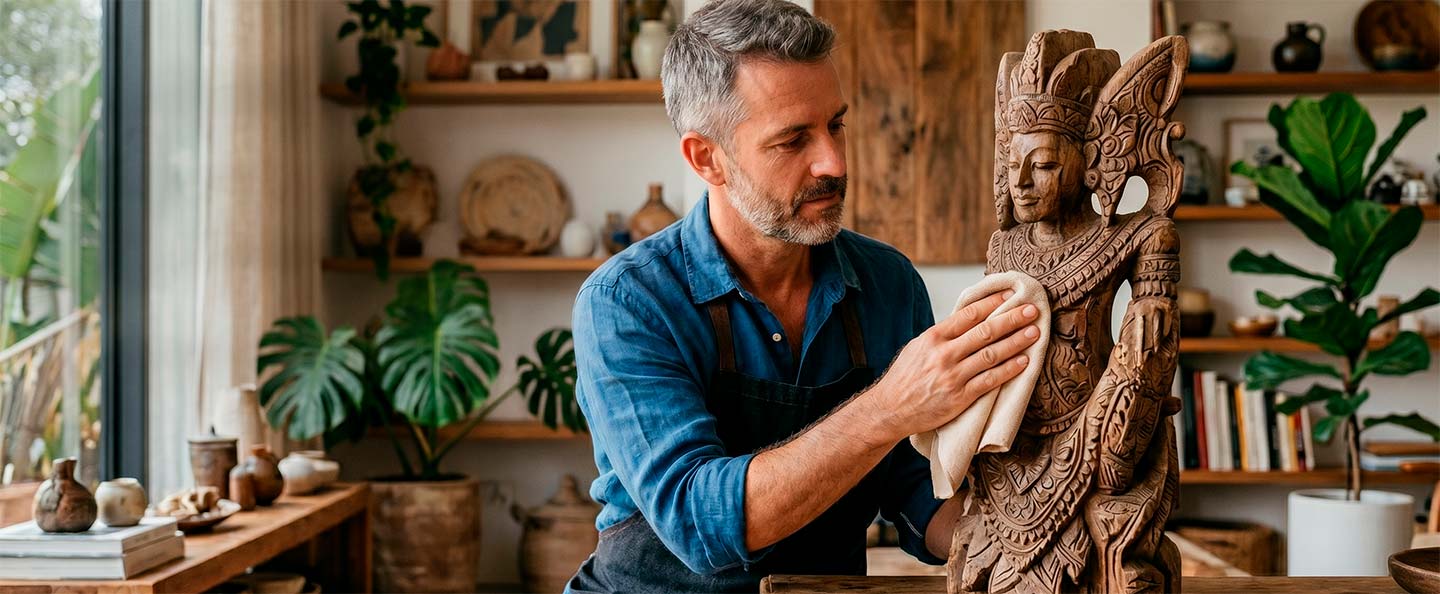
- Use a lightly damp cloth or dry flannel.
- For carved areas, use a brush or soft-bristled brush.
Maintenance
- Apply teak oil 2 to 4 times a year indoors.
- In covered outdoor areas, application can be done every 2 or 3 months.
- Remove excess oil after application.
Avoid
- Glossy varnishes.
- Permanent exposure to rain.
- Standing water on the surface.
Suar Wood
Known for its striking grain patterns and organic edges, Suar wood requires periodic moisturizing to preserve its beauty.
Cleaning
- Dry or slightly damp flannel cloth.
Maintenance
- Apply good quality teak oil, mineral oil, or peroba oil every 4 to 6 months.
- This treatment enhances the natural grains and reduces dryness.
Avoid
- Intense sunlight for extended periods.
- Excessively dry environments or sudden temperature changes.
Albizia Wood
Light and elegant wood, widely used in sculptures and handmade decorative pieces.
Cleaning
- Only dry or slightly damp cloth.
Maintenance
- Does not require frequent moisturizing.
- When necessary, use a small amount of colorless mineral oil.
Avoid
- Excessive humidity.
- Direct exposure to the elements.
Crocodile Wood
Characterized by its unique texture and naturally aged appearance.
Cleaning
- Dry or slightly damp flannel cloth.
Maintenance
- Apply only colorless finishing wax when you wish to enhance the texture.
- Gently polish with a soft cloth.
Avoid
- Peroba oil.
- Teak oil.
- Products that excessively darken the surface.

River Stone (Pedra de Rio)
Cleaning
- Damp cloth and diluted mild soap when necessary.
- Dry immediately after cleaning.
Avoid
- Acidic products.
- Bleach.
- Abrasive cleaning.
Green Stone (Volcanic Stone)
Cleaning
- Slightly dampened cloth.
Maintenance
- Occasional application of specific wax for natural stones can enhance the tone.
Avoid
- Harsh chemical products.
- Solvents.
Limestone (Calcário)
Naturally porous and sophisticated material.
Cleaning
- Damp cloth with clean water.
Avoid
- Any acidic product.
- Heavy cleaning.
- Prolonged contact with liquids.
Marble
Cleaning
- Soft cloth with water.
- Extremely diluted mild soap when necessary.
Avoid
- Vinegar.
- Lemon.
- Alcohol.
- Abrasive products.
Important
Spills should be removed immediately to prevent stains.
Onyx
Onyx is a noble and relatively delicate mineral.
Cleaning
- Only use a soft, slightly damp cloth.
Avoid
- Vinegar.
- Acidic stone cleaners.
- Abrasive products.
Important
As it is translucent, it is recommended to avoid impacts and falls.

Rattan, Seagrass, Water Hyacinth, Banana Leaf and Bamboo
Natural fibers are living materials that continue to react to the environment even after their artisanal transformation.
Cleaning
- Low-power vacuum cleaner or soft duster.
- Dry or slightly damp cloth.
Maintenance
- Regular cleaning to prevent dust accumulation between the weaves.
- In very dry environments, a small amount of colorless mineral oil can be used once or twice a year.
Avoid
- Directly wetting the piece.
- Chemical products.
- Constant sun exposure.
- Environments with excessive humidity.
Important
Small variations in color and visible fibers are part of the material's nature and are not considered defects.

Vases, fountains, and sculptures in marmorite
Items made of marmorite combine beauty, delicate details, and excellent durability. Widely used in sculptures, fountains, and decorative objects, they possess an elegant mineral appearance and a smooth finish, making each piece unique. Small variations in tone, texture, and finish are part of the natural characteristics of the production process and are not considered defects.
Cleaning
- Use a soft cloth, gentle sponge, or soft-bristled brush.
- For routine cleaning, use water and neutral soap.
- Regularly remove dust, leaves, moss, and other accumulated residues.
- After cleaning, rinse and dry the piece when possible.
Maintenance
- In outdoor environments, it is recommended to perform periodic cleanings to prevent the accumulation of dirt and moisture.
- In coastal regions, increase the frequency of cleaning due to the action of sea spray.
- To maintain the original appearance, keep the piece in a well-drained location and avoid constant water accumulation on its surface.
Deep Cleaning
- In case of stains caused by time, moisture, moss, or algae, a solution of Azulim (with neutral PH) can be used, as per the manufacturer's instructions.
- After application, rinse the piece thoroughly.
- Always perform a preliminary test in an inconspicuous area before full application.
Avoid
- Steel wool.
- Sandpaper or abrasive materials.
- Impacts and falls.
- High-pressure washers applied too close to the piece.
- Concentrated chemical products without manufacturer's guidance.
Important
- Small variations in tone, texture, and finish are part of the material's authenticity.
- Over the years, pieces exposed to the elements may show natural alterations due to the action of sun, rain, and humidity.
- These characteristics do not compromise the beauty, resistance, or durability of the piece.

Bronze
Bronze is a noble and durable material, widely used in sculptures and decorative objects. Over time, it can develop a natural patina that enhances its appearance and reinforces its authenticity.
Cleaning
- Use a dry flannel or soft cloth.
- For more stubborn dirt, use a lightly dampened cloth and then dry.
- In areas with details or reliefs, use a brush or soft-bristled brush.
Maintenance
- Perform periodic cleaning to prevent dust accumulation.
- When desired, use a specific metal wax following the manufacturer's recommendations.
Avoid
- Abrasive products.
- Steel wool.
- Harsh polishes.
- Corrosive chemical products.
Important
- The appearance of patinas and subtle changes in tone are natural processes of bronze.
- These characteristics are part of the material's evolution and are not considered defects.
Aluminum
Aluminum combines strength, lightness, and versatility, making it widely used in contemporary sculptures and decorative objects.
Cleaning
- Use a soft cloth with water and mild soap.
- Dry completely after cleaning.
- For detailed areas, use a soft-bristled brush.
Maintenance
- Perform periodic cleaning to preserve the finish of the piece.
- In outdoor environments, it is recommended to increase the frequency of cleaning due to weather exposure.
Avoid
- Steel wool.
- Abrasive products.
- Harsh solvents.
- Rough sponges.
Important
- Small marks and finish variations may occur in handcrafted pieces.
- Prolonged contact with sea air or excessive humidity can accelerate the natural wear of the finish.
Glass
Glass pieces bring lightness, transparency, and sophistication to environments. Due to their delicate nature, they must be handled with care to preserve their shine and integrity.
Cleaning
- Use a soft cloth or clean flannel.
- When necessary, use water or glass cleaner applied to the cloth, never directly on the piece.
- Dry after cleaning to avoid marks and stains.
Maintenance
- Perform periodic cleaning to maintain transparency and shine.
- Always handle the piece with care, supporting it by its base when possible.
Avoid
- Abrasive sponges.
- Steel wool.
- Abrasive products or aggressive solvents.
- Impacts, falls, or sudden temperature changes.
Important
- Small bubbles, subtle marks, or variations may occur in handcrafted pieces and are part of the authenticity of manual work.
- Special attention is recommended during the transport and movement of the piece to avoid damage.
Ceramic
Handmade ceramics are valued for their unique textures, glazes, and finishes. Each piece may exhibit exclusive characteristics resulting from the manual production process.
Cleaning
- Use a soft cloth or gentle sponge.
- When necessary, use water and mild soap.
- Dry the piece after cleaning.
Maintenance
- Perform periodic cleanings to prevent the accumulation of dust and residue.
- Keep the piece in a stable place to avoid falls and impacts.
Avoid
- Falls and bumps.
- Sudden temperature changes.
- Abrasive products.
Important
- Small variations in tone, texture, glaze, and finish are natural characteristics of handmade production.
- These variations make each piece unique.
Terracotta
Made from natural clay, terracotta is a traditional material known for its rustic appearance, porous texture, and earthy tones.
Cleaning
- Use a dry cloth, duster, or soft-bristled brush.
- When necessary, use a lightly dampened cloth.
- Allow the piece to dry completely after cleaning.
Maintenance
- For outdoor environments, periodic cleaning is recommended to prevent the accumulation of dirt and moisture.
- Ensure good drainage when used as a pot.
Avoid
- Constant waterlogging.
- Harsh chemical products.
- Impacts and falls.
Important
- As a naturally porous material, terracotta can absorb moisture and show subtle changes in tone over time.
- These characteristics are part of the material's authenticity.
Cement and Fiber Cement
Cement and fiber cement pieces combine strength, durability, and contemporary aesthetics. These materials are widely used in pots, sculptures, and decorative objects for indoor and outdoor environments.
Cleaning
- Use a damp cloth or a soft-brbristle brush.
- When necessary, use water and neutral soap.
- Regularly remove dust, leaves, and accumulated debris.
Maintenance
- For outdoor areas, perform periodic cleaning to prevent the accumulation of dirt and moisture.
- In coastal regions, increase cleaning frequency due to the action of sea spray.
Avoid
- Acidic products.
- High-pressure washers too close to the piece.
- Impacts and falls.
- Abrasive products.
Important
- Small pores, superficial micro-cracks, and tonal variations are natural characteristics of the material.
- Exposure to weather can cause gradual changes in appearance without compromising the structural strength of the piece.
Canvas Paintings
Canvas paintings are works of art that deserve special attention to preserve their colors, textures, and finishes over the years. Proper display and correct care help maintain the original beauty of the work and extend its durability.
Cleaning
- Use only a soft duster, dry flannel, or a clean, dry cloth.
- Gently remove dust without pressing on the painted surface.
- Periodically clean the frame and the back of the canvas as well.
Maintenance
- Keep the artwork indoors, in dry and well-ventilated environments.
- Whenever possible, avoid locations subject to large variations in temperature and humidity.
- Periodically check the canvas and installation supports for secure fastening.
Avoid
- Cleaning products, water, alcohol, or solvents.
- Directly touching the painted surface.
- Prolonged exposure to direct sunlight.
- Environments with excessive humidity, such as uncovered outdoor areas and bathrooms.
- Resting objects on the canvas or applying pressure to its surface.
Important
- Small variations in texture and finish are part of the natural characteristics of artworks and the manual production process.
- Continuous exposure to sunlight can cause gradual fading of colors over time.
- In case of stains, damage, or the need for restoration, it is recommended to seek a professional specializing in art conservation.

