

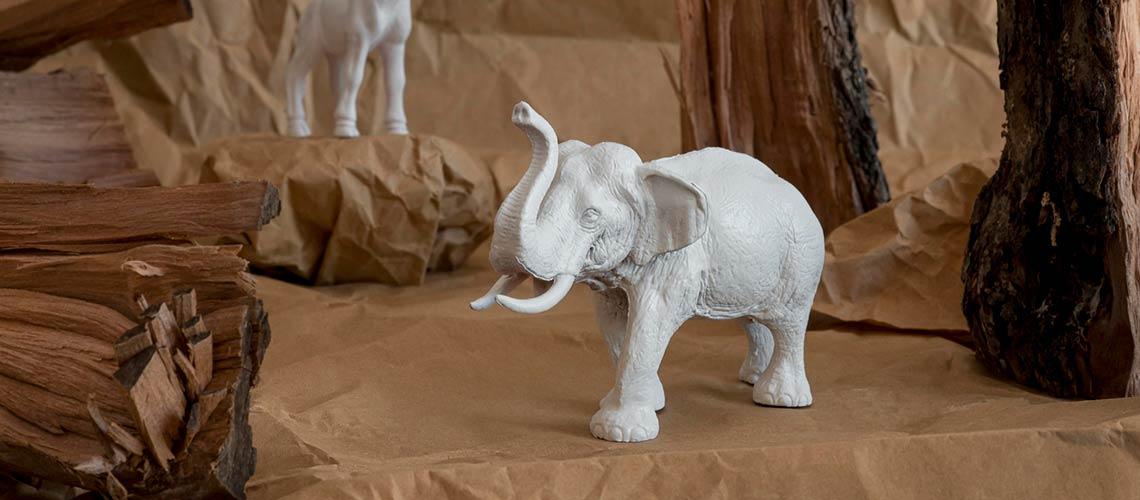
Indonesian traditional art is marked by a deep connection with nature, with a special emphasis on animals that represent spiritual values, ancestral wisdom, and cultural beliefs. Among sculptures, masks, carved furniture, and decorative panels, certain animal figures appear frequently, not only for their beauty but also for the symbolism they carry. In this article, we explore the five most represented animals in Indonesian crafts and reveal their meanings, where they typically appear, and the stories that surround them.
Explore our collection here: Indonesian handicrafts.
1. Elephant
Why is the elephant so widely used in Indonesian handicrafts?
The elephant is revered in various Asian cultures, especially due to its connection with the god Ganesha in Hinduism. In Indonesia, this symbolism is also manifested through the image of the elephant as a guardian of wisdom, abundance, and ancestral memory. Its imposing presence and intelligence make it a noble animal, associated with stability and spiritual protection.
Where does it appear in the decor?
Wood sculptures with gilded details or refined carvings;
Statues of Ganesha with elephant bodies, commonly used on altars and in entrance halls;
Furniture with handles or legs carved in the shape of an elephant.
See our entire Elephants collection here.

2. Gecko (or Tokek)
Why is the gecko so prominently featured in Indonesian crafts?
According to local belief, the sound emitted by the gecko (a type of lizard) wards off negative energies and announces good news. In Bali, this animal is considered a natural talisman and a symbol of spiritual protection and harmony with nature.
Where does it appear in the decor?
Carved wooden panels featuring stylized geckos;
Decorative masks with embossed gecko appliqués;
Wall sculptures with pointillist painting, depicting lizards in vibrant colors.
Discover our Geckos collection .

3. Turtle
What is the symbolism of the turtle in Indonesian crafts?
The turtle represents longevity, patience, and connection to the waters and the spiritual world. In many Indonesian islands, it also symbolizes the cycle of life and the balance between the physical and spiritual worlds, thus being an archetype of ancestral wisdom.
Where does it usually appear?
Bowls and trays in the shape of turtles carved from wood;
Decorative sculptures with ethnic or geometric details;
Tribal masks in which the turtle appears alongside other symbols of nature.
Local legend:
According to tradition in some coastal communities, the turtle is a messenger between the sea gods and humans. It is said that by saving a turtle trapped in nets, good luck and fertility are guaranteed to the fisherman's family.
Explore our Turtles collection .

4. Owl
Why is the owl so prevalent in Balinese sculptures?
The owl is considered a mystical animal, a symbol of intuition, wisdom, and protection against hidden forces. Despite being associated with mystery and the night, its presence in Balinese crafts evokes an attentive gaze and ancestral wisdom, being seen as a silent guardian of homes.
How does it appear in the decor?
Rustic sculptures with large eyes and stylized features;
Decorative wooden masks with carved wings;
They also appear as small tabletop totems or sideboards.
Click here to check out our: Owl Collection .

5. Dragon (Naga)
What is the role of the dragon in Indonesian culture?
The dragon, known locally as Naga, is a mythological figure of extreme importance. It represents protection, fertility, spiritual power, and the connection between the physical and invisible worlds. The Naga frequently appears in ceremonial rituals, traditional dances, and, of course, handcrafted items.
Where does it appear in Indonesian handicrafts?
Detailed sculptures with sinuous shapes and a fierce expression;
Carvings on doors, pillars, and ceremonial beds;
Masks used in ritual dances and wall decorations.
Local legend:
It is said that the Naga guard the sacred springs of the island and that their fury can cause storms or eruptions. Therefore, Balinese people frequently make offerings and carve their image as a way to honor and balance the energies.
See more: Dragons Collection.

6. Duck
The duck, especially in Balinese landscapes, represents more than just a farm animal—it symbolizes prosperity, abundance, and harmony in the home. This is partly due to its group behavior and the role it plays in rice paddies, where it helps control pests, thus becoming an animal associated with fertility and the natural cycle of life.
Why is the duck so widely used in crafts?
In Balinese culture, the duck is seen as a guardian of balance and abundance. Its constant presence in rice paddies and villages has made it a familiar and welcoming figure. Furthermore, its serene gait and the image of duck families walking together inspire feelings of unity and peace, reinforcing its use as a positive symbol in domestic settings.
How does the duck appear in the plays?
You will find the duck depicted in:
Wooden sculptures with a rustic or colorful finish;
Pieces carved in pairs or trios, alluding to family and abundance;
Decorations for gardens and balconies, especially in tropical or Balinese style.
There is also a local tradition that says that, during planting season, ducks were released into the fields as a way to bless the harvests, bringing balance between human work and nature. This belief further reinforced their role as a spiritual and decorative animal in Bali.
Buy the Boots Duck with Terrarium here.


